

 6:54 PM
 ngetoyo

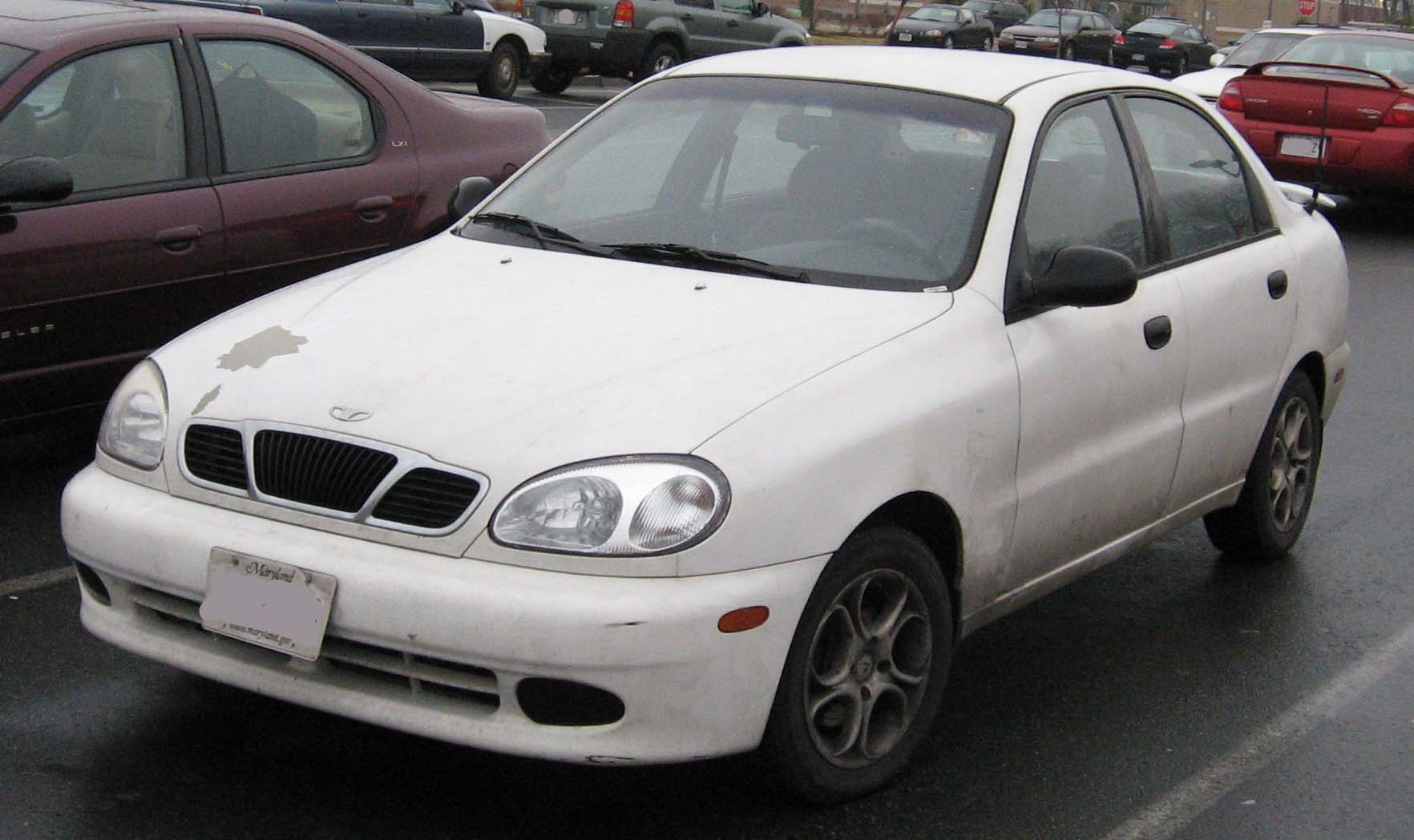
In 1992, Daewoo dissolved its joint-venture with General Motors, and simultaneously a decision was made to independently develop replacements for the contemporary Daewoo Motors products, based on older General Motors models. The Lanos development programme was formally started in autumn 1993, with the goal to create a car to replace Daewoo Nexia as Daewoo's small family car.
 The project began with a comparative study of competing models from 20 different manufacturers, with Toyota Tercel, Opel Astra and Volkswagen Golf identified as most competitive. Four design studios were commissioned to deliver clay models preseting their ideas for the new model's styling. Giorgetto Giugiaro's design was chosen, and Italdesign was commissioned to develop the car's final outside and interior styling. The technical side of the project was conducted simultaneously by Daewoo's development centre Korea as well as suppliers and contractors, who were involved in developing particular components. This included AC Rochester (engine componentry), Delco Chassis Division (brakes, including ABS), GM Powertrain (automatic transmission), Italdesign (body, structural analysis, electrics, prototype construction), PARS Passive Rückhaltesysteme GmbH (airbags) and Porsche (vehicle concept — research, structural analysis, suspension and brake components, and experimental production supervision). The cars were equipped with GM Family 1 D-TEC I4 engines ranging from 1.5 L (1549 cc) SOHC to 1.6 L (1598 cc) DOHC. In the UK and many countries of Europe (like Italy, France or Austria) there are also E-TEC models 1.4 (1349 cc) and 1.6 (1598 cc). The suspension is built upon that of a Daewoo Nexia, as used in Vauxhall/Opel Astra Mk2 GTE. The four models available were S, SE, SE Plus, SX, and later, the SPORT model. The S was the base model and did not include many standard features (like a CD player or power windows). The SE was just a small step up from the S base model. However, the SX model usually included a CD, radio, and cassette player along with power windows, a power side mirror, and fog lights. A few select SX models even came with a sun-roof though not many did. In the Lanos's later years, the SE and SX models were dropped and replaced with a new trim line called the SPORT (2001–2002). The SPORT included several features similar to the SX, but also included red/black leather seats, and a metallic silver dash trim. Also, the SPORT model had window controls located on the doors rather than the center console (like in the previous trim lines).
 CKD kits were supplied to the Polish car factory FSO, the Ukrainian ZAZ and Russian TagAZ (where it was briefly sold as the Doninvest Assol). From 2002, ZAZ equipped some of the kits with a domestic MeMZ-307 engine and sold this version under the Daewoo Sens name; this practice continues with the start of full-scale production of model T150. In 2004, ZAZ adopted the Lanos chassis for full-scale production and installed new welding and painting lines. The updated version is called the ZAZ Lanos (internal model T150). The engines are still supplied by GM Daewoo, although ZAZ is currently seeking a way to acquire modern engine technology. ZAZ is selling the Lanos as ZAZ Sens. The "Sens" name is used on the pre-facelift models. Since January 2005, the Lanos produced in Poland started to be sold under the brand name of FSO. In 2005, General Motors contracted with ZAZ to provide Ukrainian-assembled Lanos models for the Russian market, to be imported duty-free, thanks to an international agreement, and sold through the GM dealer network. Sales of the Chevrolet Lanos sedan commenced in Russia in November 2005. The Chevrolet brand was utilized to compete effectively with the Renault Logan. In 2006, a panel van variant of the ZAZ Lanos was introduced. The 5-door hatchback version was available with all the options and manual transmission; it was also called Daewoo "Juliet" in Egypt. Near the end of year 2000 the Lanos was introduced with a different rear end design and a face lifted front. It was called "Lanos II" in this particular market. A SE version came with all the options plus the manual transmission. The automatic transmission version was stopped shortly after the introduction of the "Lanos II". In November 2008, GM Egypt started selling Chevrolet Lanos. The car is built in the company's factory in 6 October district and it is basically a Daewoo Lanos with a Chevrolet emblem. The Lanos was finally phased out after the 2002 model year, superseded worldwide by the Daewoo Kalos. Daewoo ceased operations in North America. After GM took over Daewoo to become GMDAT, Chevrolet began importing the Daewoo Kalos, rebadged as the Aveo, to North America beginning with MY2004. The 2001 and 2002 models follow a recent trend among cars intended to be sold in many markets, in that their rear lamps are asymmetric, with the fog lamp and reverse lamp occupying complementary spots on the driver's side and passenger side respectively; consequently, the rear lamps differ between left- and right-hand drive examples.
 Posted in: Daewoo


0 comments:
Post a Comment